
Okay, let’s be honest. It hasn’t been 15 years. I’m only 34. I haven’t been a Solution Architect my entire life.
But I did spend the last decade deep in enterprise architecture. I moved from Junior Developer to Tech Lead. I built high-load microservices. I helped set up Scrum.
And don’t get me wrong, I actually liked parts of it. The dynamic environments were fun. I enjoyed building agile teams, even inside massive, slow-moving enterprises.
But somewhere along the line, I stopped building for fun.
For the last few years, I’ve mostly been consulting. Freelancing on Toptal. Drawing architecture diagrams. Three clouds. Kubernetes clusters. Message queues. 3 different teams just to maintain the thing.
“Enterprise tech has very little to do with building great things. It’s about mitigating risk.”
Enterprise tech has very little to do with building great things. It’s about mitigating risk. It’s defending your decisions. It’s endless Jira tickets and alignment meetings where 10 people debate a button color.
I like tech: Hono or ElysiaJS, bee-queue or BullMQ. Should I continue with .NET or use TypeScript. I like creating things from scratch. And honestly, I hate enterprise bloat.
Besides, I want to make money. Not just a steady consulting paycheck—I want the outsized returns of actually owning the thing I build.
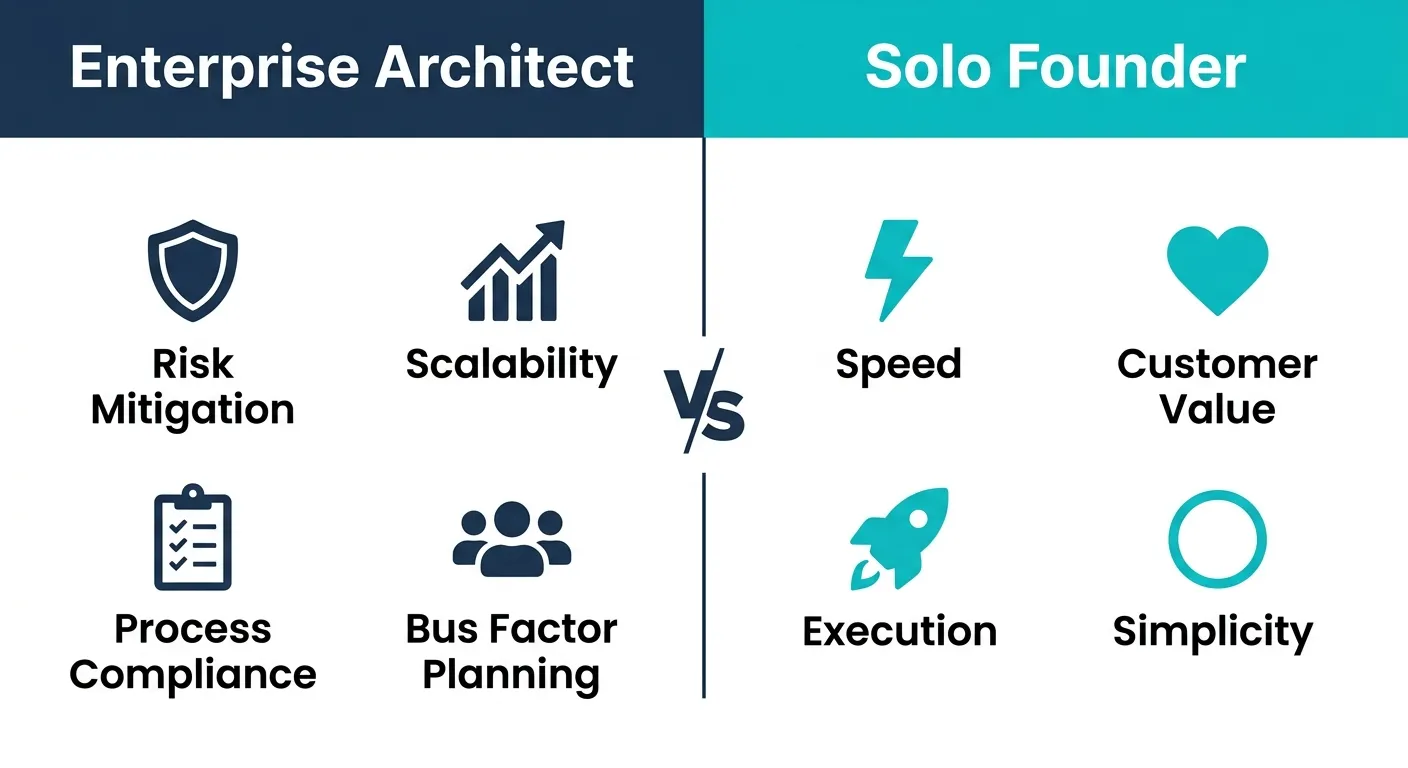
💡 Insight: The Architect Paradox
As architects, we’re trained to build systems that survive team turnover, but this same training makes us terrible solo founders. We overengineer for problems that don’t exist yet, wasting months on infrastructure that will never be used.
The Architect vs Solo Founder Mindset
As an architect, your whole job is to build systems that won’t collapse if half the engineers quit tomorrow (Bus factor). You build layers of abstraction. You argue for weeks over whether to use RabbitMQ or Kafka for a feature that literally zero users have asked for yet.
“When you have a team of 50, making a decision takes a week. When you’re solo, you make it in five minutes.”
When you have a team of 50, making a decision takes a week. When you’re solo, you make it in five minutes.
And if you look at the hiring side right now? AI screens the resumes. Applicants use AI helpers to feed them answers during the interview. The company uses AI agents to ask the questions and evaluate the code.
It’s literally robots talking to robots. So why even bother?
When you work as a solo founder, you just skip that entire fake theater. You don’t interview. You just sit down and build.
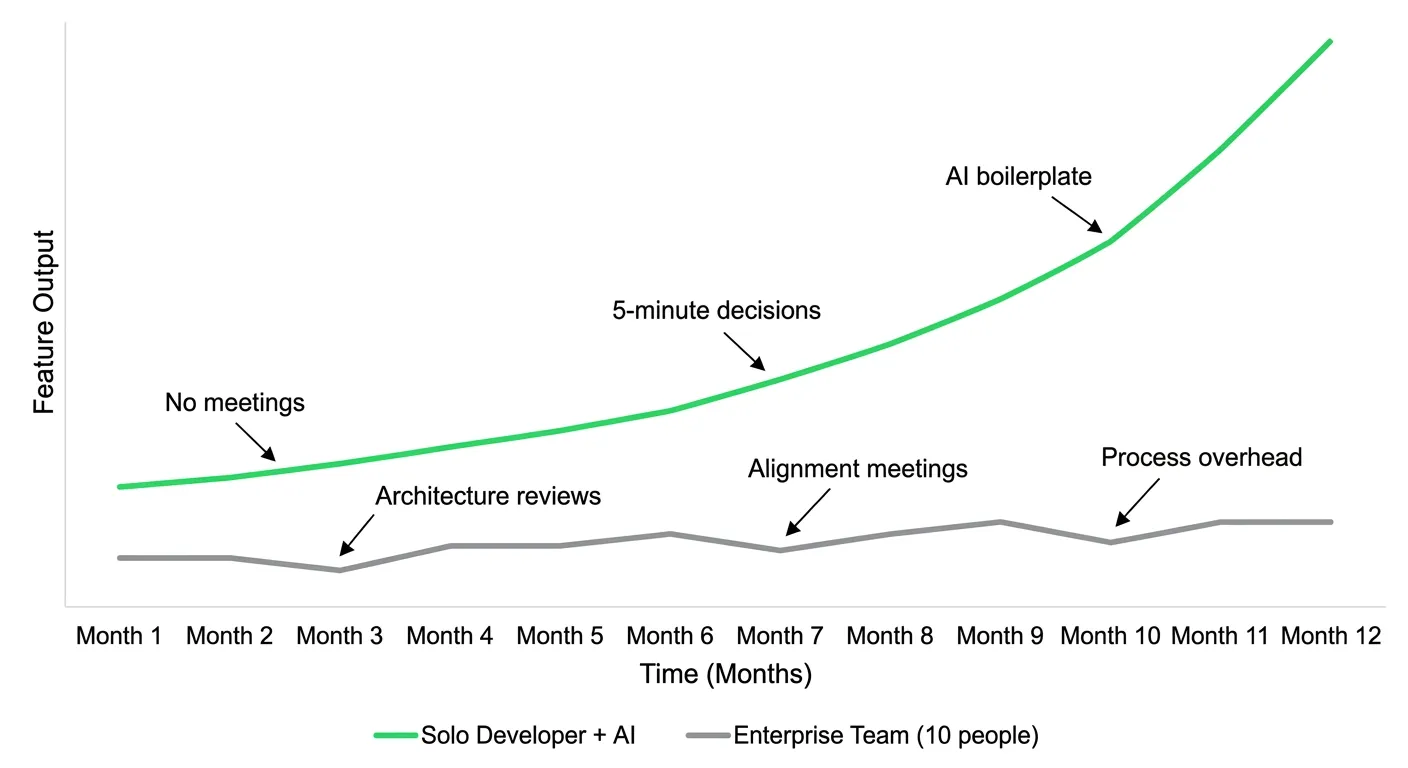
💡 Insight: AI Changes Everything For Solopreneurs
A single developer using AI tools properly can easily outpace a mid-sized enterprise team. The competitive advantage today isn’t in having more people—it’s in removing all the friction that prevents people from building.
Building QuotyAI: A Product That Actually Does The Work
I was the Tech Co-Founder at Superbench. We built sales and scheduling AI for home service companies.
It is a great product, but I wanted to go deeper into AI—I was looking for more of that “wow” factor.
So I’m building QuotyAI, the product I like and what matches my interests: a deterministic sales AI omnichannel platform with a built-in coding agent. Instead of prompting LLMs to guess answers, it generates actual executable TypeScript business logic—pricing formulas, quotation rules, order validation—so replies are 100% accurate every time. It unifies a real knowledge base, omnichannel inbox, and full auditability into one tool, something none of the competitors do.
That’s the “wow” factor I was looking for: AI that doesn’t just sound smart, but actually does the work reliably.
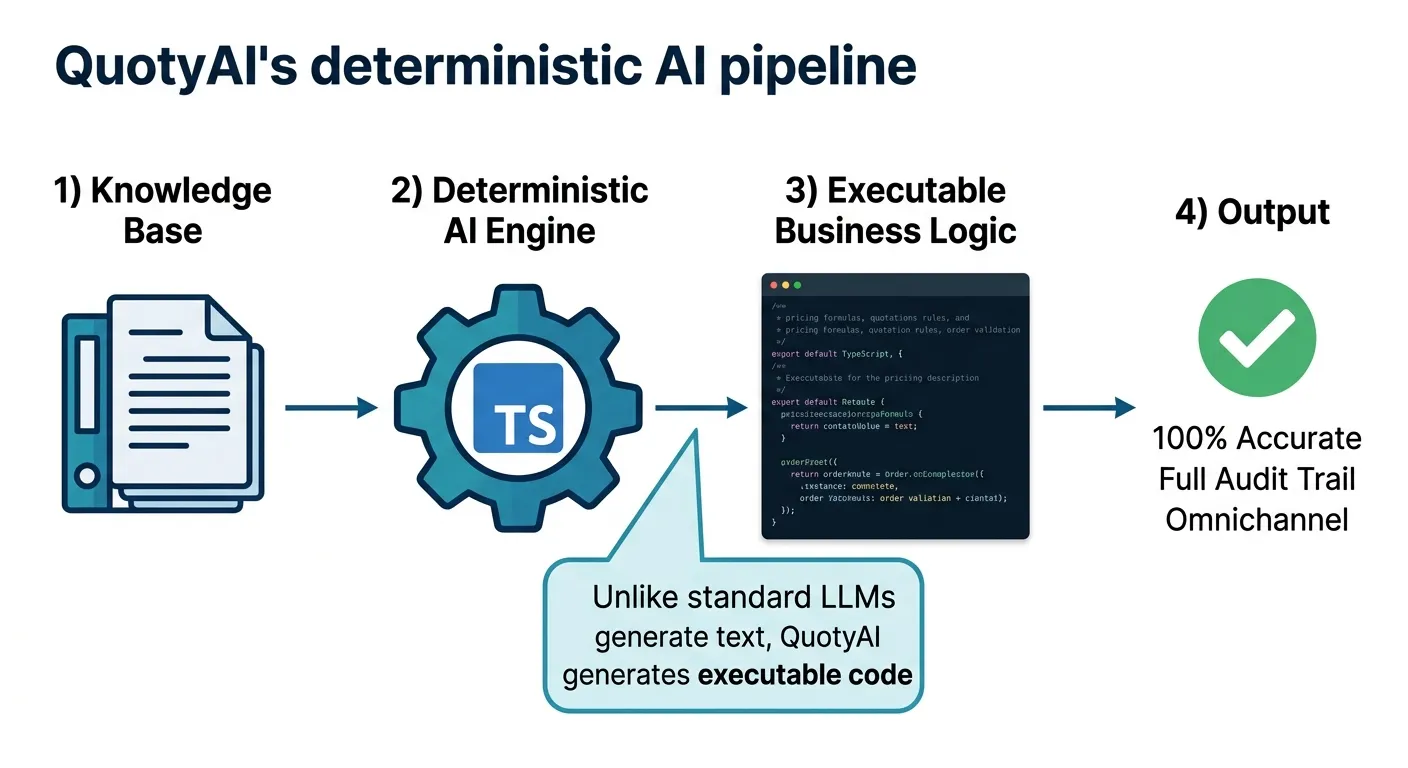
💡 Insight: Determinism Is The Next AI Frontier
Most AI products today optimize for sounding convincing. The real opportunity is in AI that generates verifiable, executable output. This is the difference between AI that gives you advice and AI that actually does your work.
Taking What Works, Leaving The Bloat
You don’t spin up a Kubernetes cluster on day one for this. You don’t over-engineer. You just build the exact piece of code that solves the problem in front of you.
We live in an era where AI agents can write the boring boilerplate for you. A single developer using AI tools properly can easily outpace a mid-sized enterprise team.
Are we overcomplicating software just to justify our high salaries? I think we are. And I’m done playing that game.
Enterprise Experience is Not Trash
Every single one of those enterprise practices got invented because someone got burned. I do not throw any of that out.
I still write maintainable, idiomatic TypeScript code. I still have proper CI/CD pipelines running tests before every deploy. I still define precise contracts between the backend and frontend. I still monitor everything with OpenTelemetry. I still use proven patterns like dependency injection.
The difference is clear. I do not build seven layers of abstraction for a feature that ten people will use. I do not spin up a Kubernetes cluster for something running perfectly on a $15 VPS. I do not have a two-week architecture review process.
“Break the wrong things once at enterprise scale, and you learn quickly which rules actually matter.”
Break the wrong things once at enterprise scale, and you learn quickly. You learn which rules actually matter. You take the good parts that prevent pain. You leave the bloat behind.
You just build the exact piece of code that solves the problem in front of you. A single developer using AI tools properly can easily outpace a mid-sized enterprise team.
Trading Theater for Execution
This is what being a solo tech founder means to me today.
No venture capital funding required. No fake hiring theater. No endless alignment meetings. Just building the exact thing people actually need.
I traded ten-person architecture reviews for five-minute decisions. I traded Kubernetes clusters for simple, robust deployments. I traded Jira tickets for actual working software.
Besides, I want to generate real revenue. Not just collect a steady consulting paycheck. I want the outsized returns of owning the thing I build.
I am building QuotyAI in public. I will share every mistake, every win, and every deployment. I am building it for homestay owners, cafe operators, and small business people. They do not need enterprise bloat. They just need something that works reliably.
And for the first time in years, I am building for fun again.
Will the rest of the industry realize they are drowning in their own complexity before it is too late?
Frequently Asked Questions
Why did you leave enterprise architecture to become a solo founder?
After a decade building enterprise systems, I realized most of my work was about mitigating risk rather than building great products. I wanted to own what I build, skip the corporate theater, and get back to building for fun while creating real value for small businesses.
How does enterprise experience help as a solo founder?
Enterprise experience teaches you which engineering practices actually prevent pain at scale. I still use CI/CD, OpenTelemetry, and dependency injection—but I skip the seven layers of abstraction and two-week architecture reviews that don’t serve small teams.
What makes QuotyAI different from other AI sales tools?
QuotyAI uses deterministic AI that generates executable TypeScript business logic instead of just sounding convincing. This means pricing formulas, quotation rules, and order validation are 100% accurate every time, with full auditability that competitors don’t offer.
Can one developer really outpace an enterprise team?
Yes, when you remove all the friction. A single developer using AI tools effectively doesn’t need to attend alignment meetings, wait for architecture reviews, or navigate organizational politics. They can focus exclusively on building what matters.