
I built QuotyAI because I was tired of AI that guesses. I was tired of waiting three hours for replies in languages I don’t speak. I was tired of tools that promise the world and deliver 30% of it.
I was also tired of everyone telling me I need to spend $500 a month on cloud bills just to get started.
This is not a “how to be cheap” post. This is an autopsy of the modern solo founder stack. The anti-gravity tools no one talks about. The tradeoffs. The hard limits. And exactly how I run production AI workloads for less than the cost of two coffees per week.
This is not theory. This is exactly what powers QuotyAI today.
Total cost: $30/month.
The Decision Matrix
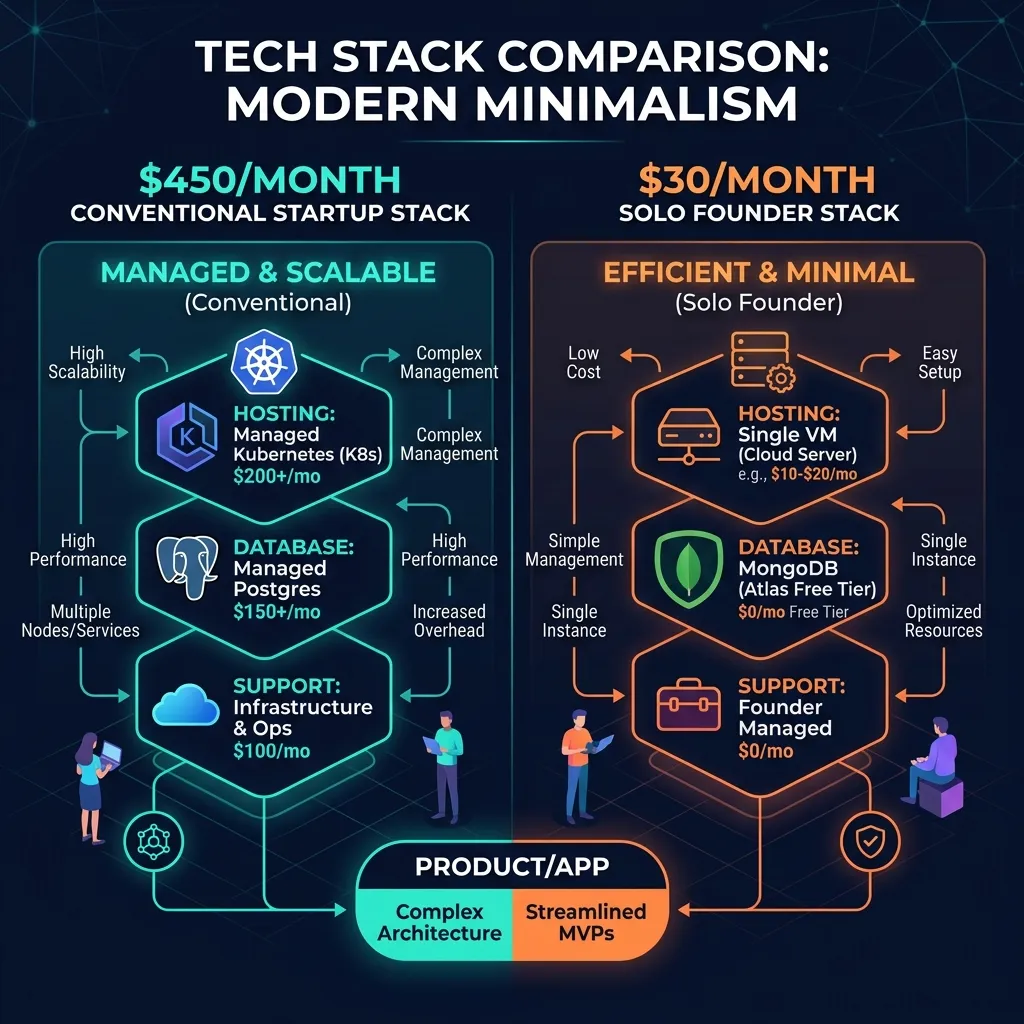
If you hire a CTO and describe requirements for a startup like mine, you get the following high-level estimations:
- $150/month managed Kubernetes
- $80/month managed Postgres
- $50/month managed Redis
- $70/month observability platform
- $100/month CI/CD minutes
- Total: $450/month. Before you even have a single customer.
This is a perfectly valid stack. It works great. If you have 10 engineers and $1M in funding, this is exactly what you should buy.
If you are one person? This creates unnecessary overhead. You will spend more time debugging your infrastructure than building your product. You may get unexpected credit card bills. You risk burning out before you get your first 10 customers.
Here is the stack I actually use:
- MongoDB Atlas: Free tier
- Aiven Redis: Free tier
- GCP e2-small VM: $30/month
- Grafana Cloud: Free tier
- GitHub: Free tier
- AI coding agents: $0/month
- Total: $30/month. No hidden fees. No surprises.
Let me steel-man the expensive stack properly. It is not stupid. It removes risk. It removes operational overhead. If your time is worth $200/hour, paying $500/month to not think about infrastructure is an incredible deal.
But when you are a solo founder pre-revenue? Your time is worth $0/hour. The most expensive thing you have is cognitive load. Not money.
💡 INSIGHT: For pre-revenue solo founders, cognitive load is your most expensive resource. Not server costs. Every additional tool you add costs you mental bandwidth that should be going to product and customers.
Here is the rubric I used, in order of priority:
- No surprise credit card bills. Ever.
- I can fix any part of this stack in 30 minutes.
- No on-call required. I sleep through the night.
This is not “MongoDB is better than Postgres”. This is “for these exact constraints, this stack lets me build product while everyone else is debugging their ingress controller”.
The Implementation Deep Dive
Let me show you exactly how this works. This is not a list of tools. This is how they fit together.
AI Coding Agents: The Real Anti-Gravity
This is the part no one talks about. This is the reason this entire thing is possible.
12 months ago, this stack would have been impossible. Today I have three AI coding agents working for me 24/7.
I use:
- Kilo for architectural work and refactoring
- Cline for writing new features
- OpenCode for debugging and tests
All run on free models: DeepSeek Coder V2 and Dola Seed.
They write 95% of the code. They write all the tests. They debug most production issues. I just review and merge.
“AI will not replace developers. But one developer with AI will replace five without it.”
This is not hype. This is not “AI will replace developers”. This is “AI lets one developer do the work of five”.
There are hard limits. They will never design your architecture. They will never make hard product decisions. They will never understand the business context the way you do.
But for everything else? They are faster. They are more accurate. They work while you sleep.
This is the anti-gravity. This is why solo founders can now compete with 10 person teams.
💡 INSIGHT: AI coding agents are the only real force multiplier available to solo founders today. They eliminate 80% of the routine work that used to require hiring additional engineers.
Total cost: $0/month. All models run on free tiers. This approach leverages the same patterns documented in the Software 2.0 thesis where developers increasingly act as curators rather than implementers.
Databases: Free Tiers That Actually Work
There’s a common belief about free tiers. People often tell you they are only for prototyping. That you will hit the limits in a week.
I have been running production on MongoDB Atlas free tier for 8 months. 1200 tenants. Millions of documents. I have never hit a single limit.
The limits are:
- 512MB storage
- 100 connections
- Low but consistent performance
For 99% of SaaS products, this is enough for 1000 paying customers. You will run out of customers before you run out of database.
I use Aiven for Redis. Same story. Free tier. 30MB storage. Handles all our session state and queueing. Zero issues.
💡 INSIGHT: Most SaaS products are incredibly low throughput. You do not need a database that can handle 10k writes per second. You need a database that is always up and never surprises you.
The secret no one tells you: Most SaaS products are incredibly low throughput. You do not need a database that can handle 10k writes per second. You need a database that is always up and never surprises you.
Total cost: $0.
Compute: The $30 VM That Handles 10k Concurrent Conversations
It’s often suggested that you need Kubernetes. For many solo founders, you likely don’t.
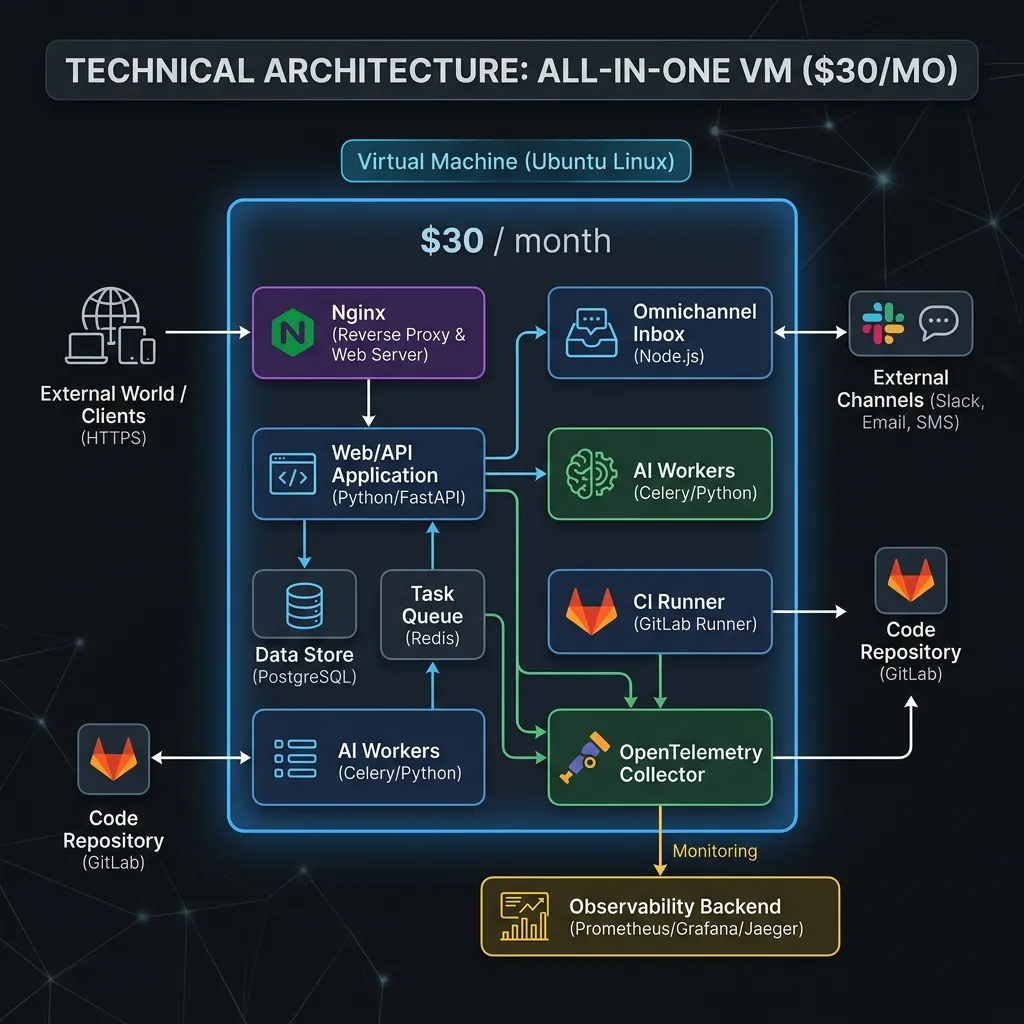
I run everything on a single GCP e2-small VM. 2 vCPUs. 4GB RAM. $30/month.
It runs:
- The API
- The AI agent workers
- The omnichannel inbox
- The GitHub self hosted runner
- OpenTelemetry collector
- Nginx
It sits at 15% CPU and 40% RAM under full load.
The tricks no one tells you:
- Azure gives you 12 months of free B1s VMs. After that they are $3.80/month.
- You don’t need load balancers. You don’t need auto scaling. You don’t need high availability.
- 99.9% uptime is good enough. When was the last time your customers complained about 43 seconds of downtime per month?
“The best high availability is not having enough customers to notice when your server is down.”
This VM has been running for 8 months. I have never once had to SSH into it to fix anything. This approach aligns with the anti-Kubernetes movement that advocates simplicity for early-stage startups.
Total cost: $30/month.
Logging And Observability: Grafana Cloud Free Tier
It’s often suggested that you need Datadog. For many solo founders, you likely don’t.
Grafana Cloud free tier gives you:
- 50GB logs per month
- 10k metrics
- 14 day retention
- Perfectly good dashboards and alerts
It does everything I need. I can see every error. I can trace every request. I get alerted when things break.
Total cost: $0.
CI/CD: GitHub Actions + Self Hosted Runner
GitHub gives you 2000 free action minutes per month. That sounds like a lot until you realize your test suite takes 2 minutes to run and you push 20 times a day.
I run all CI/CD on the same $30 VM. Zero minute limits. Zero cost.
It takes 30 minutes to set up. It just works. Following GitHub’s self-hosted runner documentation ensures you get unlimited minutes without additional costs.
Total cost: $0.
The Cost Of Admission
Every choice has a tax. This is what you pay for running a production stack for $30/month.
No SLA. No Support.
If MongoDB Atlas goes down, you get to keep both pieces. There is no support ticket. There is no one to call. You wait.
This has happened exactly once in 8 months. It was down for 20 minutes.
I can live with that. Can you?
You Will Hit Limits
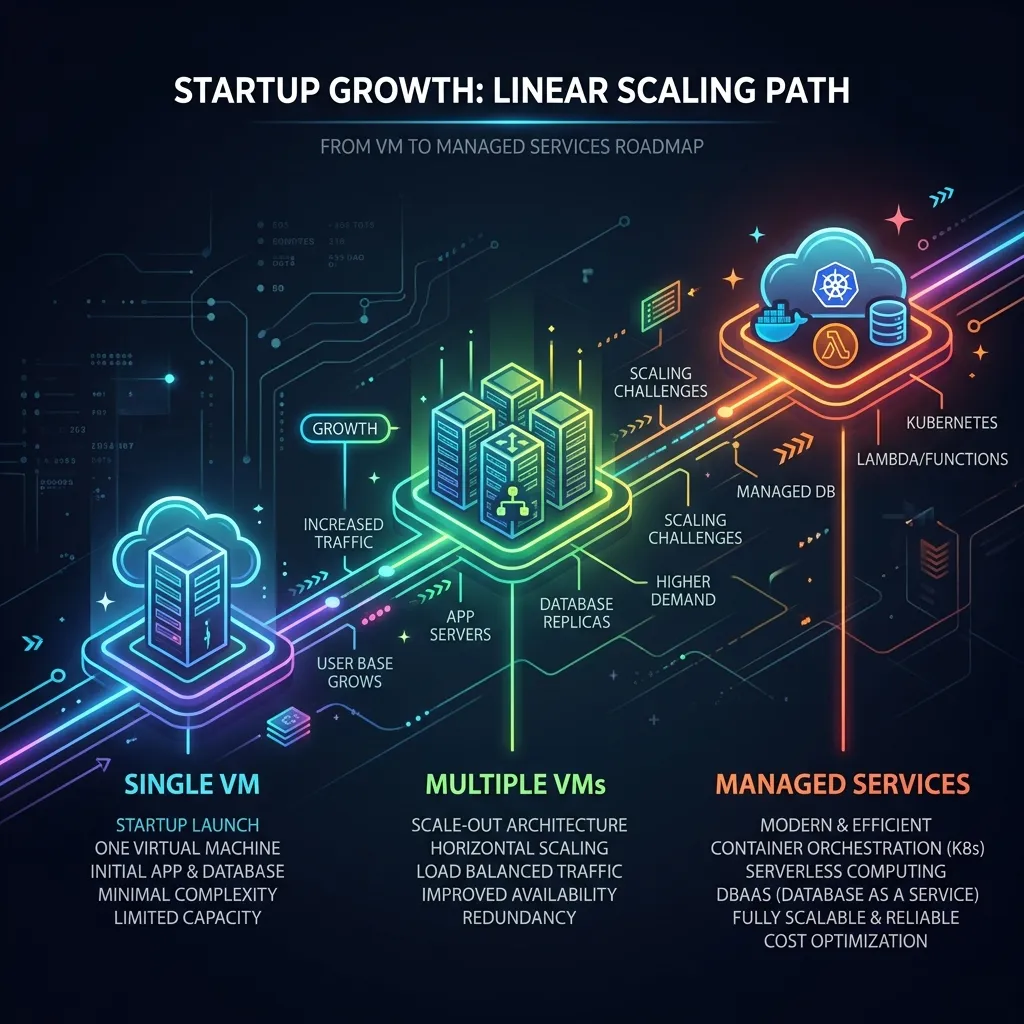
At exactly 1500 customers I will outgrow the MongoDB free tier. At exactly 3000 customers I will need a second VM.
I know exactly when this will happen. I have a plan for it. I will cross that bridge when I get there. And when I do, I will be making enough money to pay for it.
A common challenge founders face is scaling their infrastructure before they scale their revenue.
Some Things Are Just More Work
Kubernetes would make deployments easier. Datadog would have better alerting. There are a hundred small inconveniences.
But none of those inconveniences are stopping me from getting customers. None of them are stopping me from building product.
I would rather have 10 small inconveniences than one big bill.
The Verdict
Here is the thing no one will tell you.
12 months ago this was impossible. You could not run a production AI SaaS for $30/month. You needed a team. You needed funding. You needed infrastructure.
Today you don’t.
The rules have changed. AI coding agents are anti-gravity. Free tiers are good enough for production. One person can now build and operate software that would have required a team of 5 just two years ago.
This is not a trick. This is not temporary. This is the new normal.
You don’t need $1M in funding to build a SaaS. You don’t need $500/month in cloud bills. You just need to stop copying the stacks that 10 person teams use and build one that works for one person.
QuotyAI’s entire philosophy is that you don’t need the perfect solution. You need the solution that works exactly as intended, for the constraints you actually have right now.
This stack is not perfect. But it is exactly right.
If you’re a solo founder. If you’re building something weird. If you value iteration speed over theoretical purity.
Avoid overthinking it. Avoid paying for things you don’t need.
You can upgrade later. If you’re successful enough to need to.
Frequently Asked Questions
How much does it cost to run a production AI startup?
You can run a production AI SaaS startup for $30/month using free tiers for databases, observability, and AI coding agents, plus a single $30/month VM instead of expensive managed services.
What stack do solo founders use for AI startups?
Solo founders can use MongoDB Atlas free tier, Aiven Redis free tier, GCP e2-small VM, Grafana Cloud, GitHub Actions, and AI coding agents like Kilo and Cline.
Do I need Kubernetes for my startup?
For solo founders pre-revenue, Kubernetes creates unnecessary overhead. A single $30/month VM can handle 10k concurrent conversations and run all your services without orchestration complexity.
When should I upgrade from free tiers?
You should upgrade only when you have enough paying customers to justify the additional cost. For MongoDB Atlas free tier this happens at around 1500 active customers.
Are AI coding agents reliable enough for production?
AI coding agents write 95% of production code for QuotyAI, including all tests. While they don’t make architectural decisions, they excel at implementation, debugging, and routine maintenance tasks.